
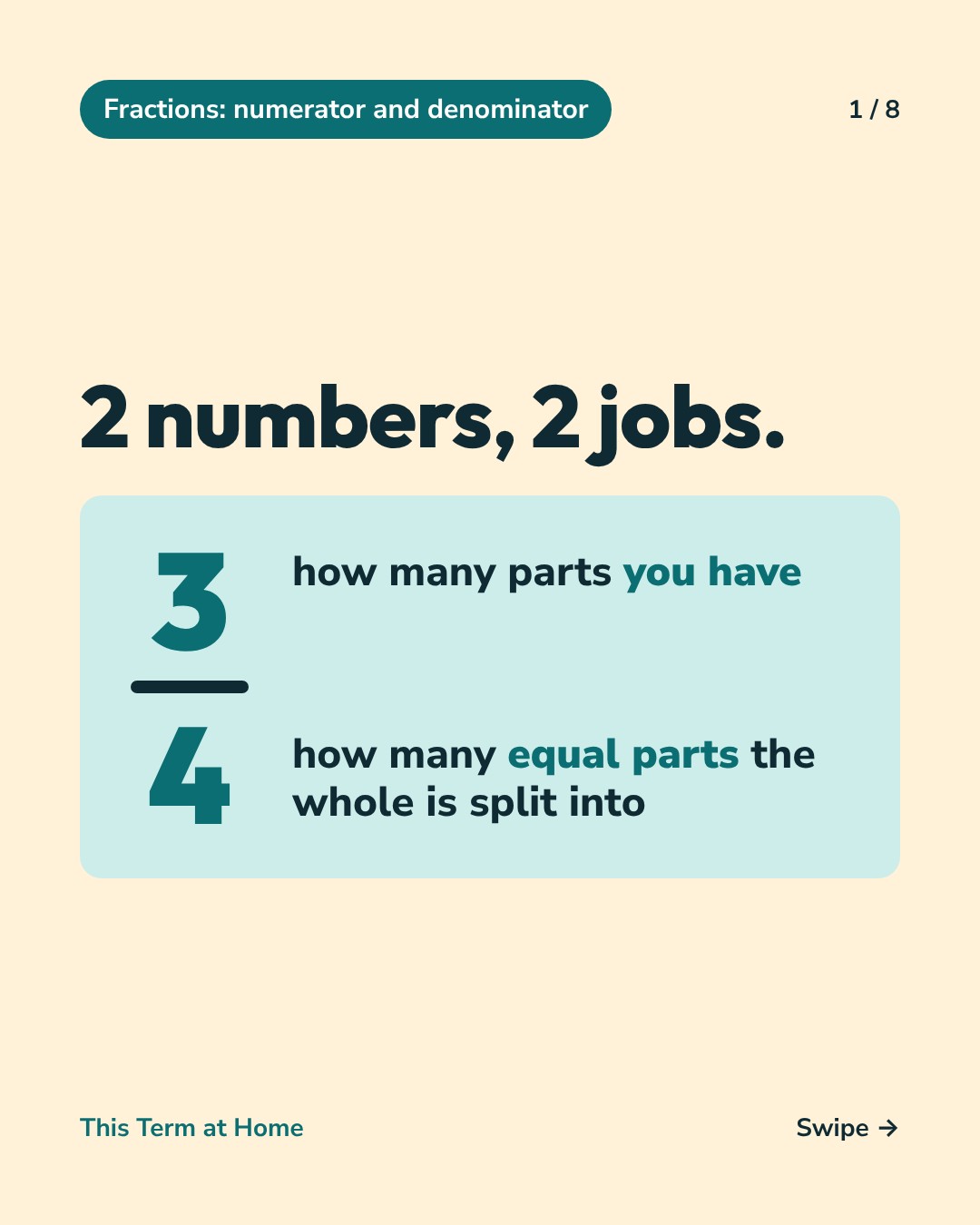
2 numbers, 2 jobs.
Fractions: what are the numerator and denominator? The denominator is the bottom number: how many equal parts the whole is split into. The numerator is the top number: how many of those parts you have.


The method in words
In 3/4:
4 = the denominator, 4 equal parts
3 = the numerator, 3 of them
Two things that trip children up:
- The parts must be equal. 4 uneven slices aren't quarters.
- More parts means smaller parts. 1/8 is smaller than 1/4.
Children use both words from Year 3. Save this for homework night.
Sources: Oak National Academy, Year 3 lessons "Use fraction notation to describe an equal part of the whole" and "Identify non-unit fractions"; national curriculum for maths, Year 3. Contains public sector information licensed under the Open Government Licence v3.0.
Get the free sheet for your child's year
Pick your child's year: one page on what most classes are learning until Christmas, and 3 things to try at home.
One short email each Sunday about the week ahead. Unsubscribe any time.
More for Every year group
 5 minutes a week to help you help your child grow in confidence at school.5 minutes a week to help you help your child grow in confidence at school
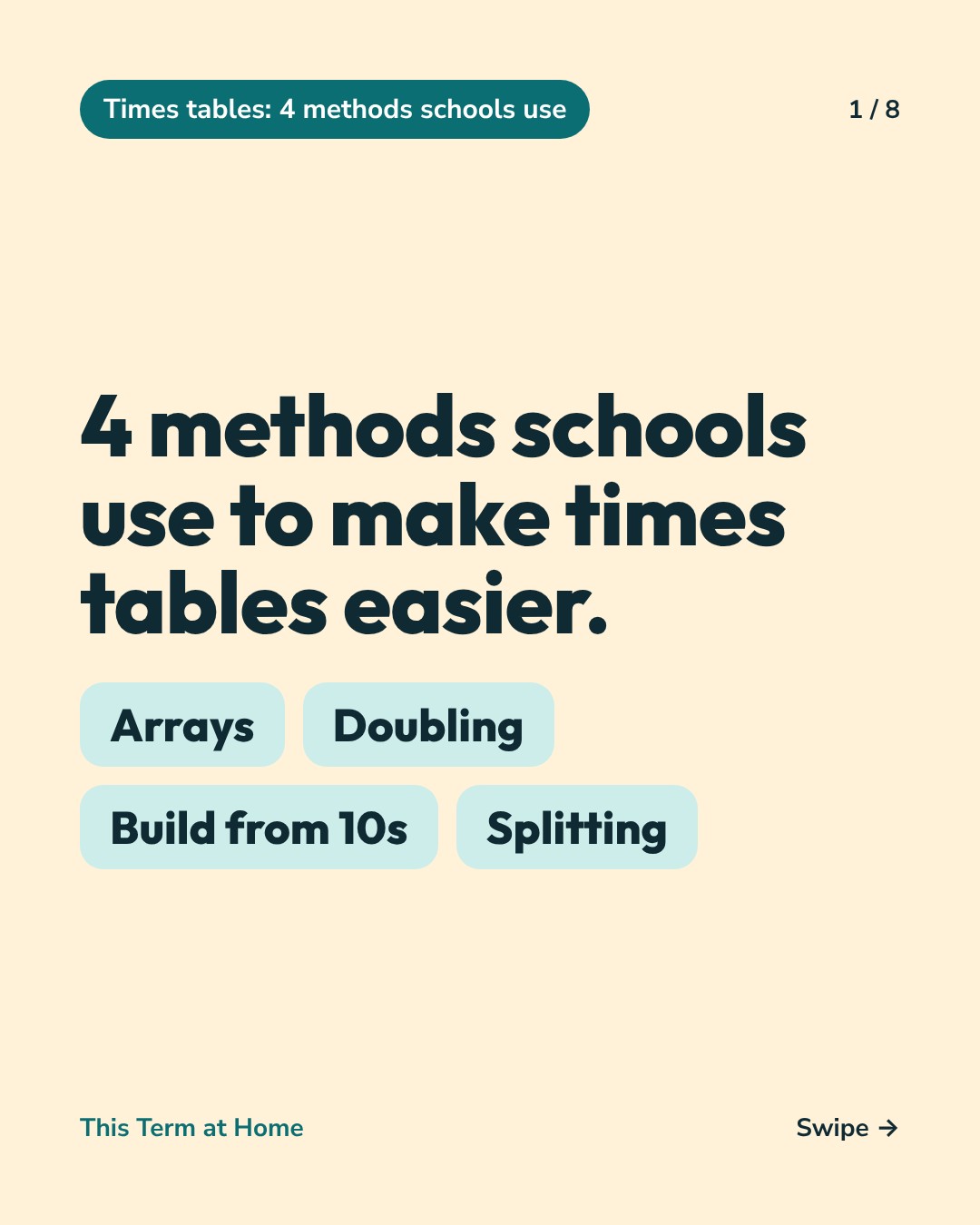 4 methods schools use to make times tables easier.4 methods schools use to make times tables easier
 Extra progress a year at primary, when parents are shown how to help with learning at home.Extra progress a year at primary, when parents are shown how to help with learning at home